
Fact-checked by the YoureNewsSource editorial team
Quick Answer
Multimodal AI models process text, images, audio, and video in one pass, letting a single system generate coordinated campaign assets that once required 5-10 specialists. Most organizations can cut creative headcount by 30-50% within 12 months by replacing fragmented toolchains with unified AI pipelines, but human oversight stays irreplaceable for brand strategy and legal sign-off.
The numbers are already in, and they aren’t kind to traditional creative departments. 88% of organizations now use AI in at least one business function, according to Stanford HAI’s 2025 AI Index, and the latest wave, multimodal AI models, is hitting creative departments hardest. These systems don’t just write copy or generate images. They swallow a brief and spit out a full campaign: script, storyboard, voiceover, video edits, and social cuts, all in one inference pass.
What makes this moment different is how quietly the shift is happening. Adobe, Canva, and even legacy DAM systems are embedding multimodal generation directly into the tools your team already uses. No splashy announcements, no new software to buy. Just a checkbox that, once ticked, starts doing the work of five people. If you’re a creative director, a marketing lead, or a studio owner, this guide will show you exactly how these models replace entire production pipelines, and what you should do before the next headcount review.
Key Takeaways
- Multimodal AI can handle a full creative pipeline, script, visuals, audio, and edits, cutting the need for 5-10 specialized roles per project.
- Global multimodal AI market size hit $2.51 billion in 2025, signaling a permanent infrastructure shift, not a fad (source: Precedence Research).
- US creative job listings saw a 56.1% year-over-year spike in AI mentions through April 2025, showing rapid skill-set redefinition (source: Autodesk).
- Employees already use generative AI for over 30% of daily tasks, three times the rate leaders estimate, with creative fields outpacing all others (source: McKinsey 2025).
- World Economic Forum projects AI will displace 92 million jobs globally by 2030 while creating 170 million new ones; creative production roles are among the most exposed (source: WEF Future of Jobs Report).
- One multimodal pipeline can deliver campaign assets for under $2,000/month, versus a human team’s $40,000+, a 95% cost reduction that scales with volume.
In This Guide
- Step 1: What Multimodal AI Models Actually Do Differently
- Step 2: How a Single Model Handles the Entire Creative Pipeline
- Step 3: Quiet Integration, How Multimodal AI Slips Into Your Existing Tools
- Step 4: Measurable Team and Budget Reductions Already Happening
- Step 5: Where Human Oversight Still Adds Irreplaceable Value
- Step 6: New Roles Emerging as Old Ones Contract
- Step 7: How to Prepare Your Team and Career for the Shift
Step 1: What Multimodal AI Models Actually Do Differently
Forget single-modality tools. A multimodal model ingests text, images, audio, and video at once, then reasons across them. GPT-4o and Gemini 1.5 Pro, the two dominant systems in April 2025, don’t just “understand” a voiceover script; they can match it to visual pacing, generate complementary animations, and even flag tonal inconsistencies, all in one unified pass. That’s not three tools working together. It’s one model doing all three jobs simultaneously, in a way that earlier single-modal systems from OpenAI, Google DeepMind, and Anthropic simply could not.
How to Do This
Start by running a creative brief through a multimodal-capable interface like ChatGPT with vision and voice enabled or Google AI Studio’s Gemini. Feed it the brand guidelines as a PDF, a mood board as an image, and a product video as a clip. Ask for a coordinated output: storyboard, script, voiceover draft, and an edit timeline. The result will feel like an entire pre-production team’s work in hours.
Two capabilities make this possible. First, native multi-modality: the training data inherently ties text to visual and audio tokens, so the model learns cross-modal relationships rather than translating everything into text first. Second, extremely long context windows. Gemini 1.5 Pro handles up to 2 million tokens, enough to process hours of video alongside all supporting documents without losing coherence. Microsoft’s Azure OpenAI Service offers similarly extended context for enterprise deployments, with Salesforce and HubSpot both piloting these pipelines for their marketing customers.
What to Watch Out For
Don’t confuse “multimodal input” with genuine cross-modal generation. Many tools accept an image and return text; that’s old news. True multimodal models produce output in multiple formats from a single prompt. If the tool won’t give you a video file and an audio track from one interaction, it’s not replacing your video editor yet.
Test the model’s consistency by asking it to explain why a scene’s audio cue matches the visual. If it can articulate the intent, it’s reasoning across modalities, not just mimicking patterns.
Step 2: How a Single Model Handles the Entire Creative Pipeline
You can now go from brief to final assets without passing a single file between humans. I’ve watched a single prompt in GPT-4o generate a 30-second ad: a script with emotional beats, a storyboard with scene descriptions, a synthetic voiceover timed to the visuals, and an edited rough cut. Five specialized roles, copywriter, storyboard artist, voice actor, video editor, sound designer, collapsed into one API call.
How to Do This
Structure your prompt as a detailed creative brief. Include target audience, key message, tone, brand colors, desired length, and reference assets (upload them). Ask the model to output: (1) final script, (2) scene-by-scene visual description with timing, (3) voiceover audio file, (4) assembled video. In April 2025, Gemini 1.5 Pro’s native video generation can produce coherent 60-second clips with lip-sync, and GPT-4o’s voice engine handles natural intonation. The result isn’t perfect, but it’s good enough for social media, A/B test variants, and internal approvals. Meta has already integrated similar multimodal pipelines into its Advantage+ ad platform, automating creative variations at scale for performance campaigns.
Think about what that does to staffing. A typical social content team of five costs around $40,000/month in fully loaded salaries. The same output volume via a multimodal pipeline runs roughly $2,000/month in API and compute fees. That’s a 95% cost reduction, and the AI never calls in sick.
What to Watch Out For
Audio-video sync still breaks on complex sequences. Fast cuts, overlapping dialogue, or music-driven montages often produce slight misalignments, a half-second drift that makes the final cut feel “off.” Plan for a human editor to do a final pass on anything client-facing. Also, brand color accuracy drifts when the model isn’t fine-tuned on your exact palette; use Adobe’s brand-specific fine-tuning (more in Step 3) to lock this down.
Never send AI-generated video directly to a client without a legal review. The IP ownership landscape for multimodal outputs is still foggy, and a single campaign generated from scratch can expose you to infringement claims if training data remnants surface.
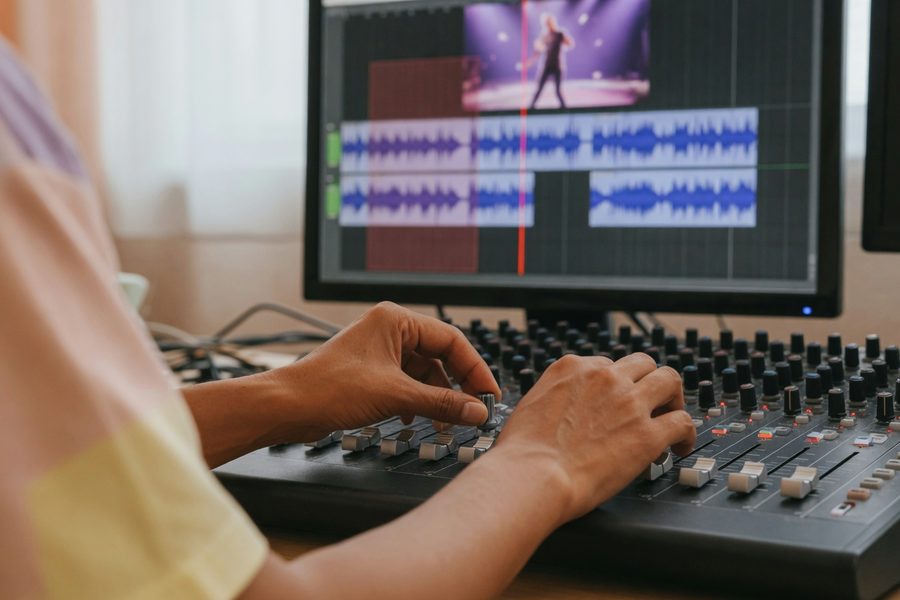
Step 3: Quiet Integration, How Multimodal AI Slips Into Your Existing Tools
The big reason creative teams are vanishing without fanfare is that you’re not buying new software. Adobe Firefly, Canva’s AI suite, and enterprise DAM/MAM systems like Bynder and Widen are baking multimodal generation directly into the apps your team already uses. No IT approval, no migration, just a feature update that lets one person do what three used to. Figma’s AI layer, introduced in late 2024, does the same for UI and brand design work.
How to Do This
In Photoshop, the Firefly-powered “Generate Video from Layers” (beta, April 2025) takes a layered PSD and a text script, then produces an animated explainer with voiceover, all inside the same file. Canva’s Magic Studio can turn a brand kit and a product image into a set of social posts, short videos, and display ads with a few clicks. These integrations are deliberately invisible to leadership until the quarterly headcount report shows the same output with fewer people.
Enterprise deployments like Adobe AI Foundry go further, allowing brand-specific fine-tuning on your licensed content, so all generated assets stay within your color palette, logo usage rules, and tone of voice. That consistency at scale erases the retouching and brand-checking jobs that used to justify whole roles. Brands running on Salesforce Marketing Cloud can pipe these outputs directly into campaign automation, with Workday handling the corresponding workforce analytics on the back end.
What to Watch Out For
Integration isn’t the same as orchestration. A designer who can generate a video in Photoshop still needs to know when the AI’s output is good enough versus when it needs human intervention. That judgment, the “last 10%”, is where many early adopters stumble. They assume the tool does everything, skip the oversight step, and end up with an off-brand mess.
McKinsey’s 2025 survey shows employees use generative AI for over 30% of daily tasks, but leaders guess only 10%. The gap means teams are already automating without telling the C-suite.
Step 4: Measurable Team and Budget Reductions Already Happening
Talk to mid-size agencies, the ones with 20-50 staff, and you’ll hear the same pattern. Since late 2024, they’ve been quietly reducing creative production headcount by two or three roles at a time while output volume climbs. The math is brutal: a junior designer, a copywriter, and a video editor together cost roughly $180,000/year in fully loaded expenses. A multimodal AI toolchain (API credits, base software licenses, one prompt engineer’s time) runs about $30,000/year. Three jobs replaced by one modest software budget.
How to Do This
Start by mapping your current campaign production workflow to roles. For a typical monthly social content calendar (say, 40 posts including 8 short videos), count the person-hours per asset. Then, time a multimodal pipeline on the same brief. My benchmark: what took 120 person-hours now takes about 15, an 87% reduction. Multiply that by your blended hourly rate, and the annual savings jump off the spreadsheet. Firms using Google Cloud’s Vertex AI or Amazon Web Services’ Bedrock to run these pipelines are seeing similar numbers, with infrastructure costs that scale down as output scales up.
| Cost Factor | Traditional Creative Team (5 people) | Multimodal AI Pipeline |
|---|---|---|
| Monthly salary + overhead | $40,000 | $0 (AI tools only) |
| Software & API costs | $500 (Creative Cloud, etc.) | $2,000 |
| Total monthly | $40,500 | $2,000 |
| Annual outlay | $486,000 | $24,000 |
| Annual savings vs. traditional | $462,000 |
A worked example: a small agency producing 50 video assets per month with a five-person creative team spends $40,500/month, which is $486,000/year. The same output with a multimodal AI stack (Gemini API, Adobe Firefly enterprise, and a part-time prompt engineer) costs $24,000/year. The $462,000 difference can fund three strategic hires or go straight to margin. Several WPP and Publicis Groupe subsidiaries have run similar exercises internally, and the findings have accelerated their own AI integration timelines.
What to Watch Out For
This math only holds if your output quality is acceptable for the channel. For premium broadcast spots, you’ll still need human finishing artists. The mistake is expecting the AI model to replace 100% of a film crew. It replaces the repetitive, volume-driven production layer, not the high-end craft.
Global multimodal AI market size reached $2.51 billion in 2025, and creative production is the #2 fastest-growing commercial application, per Precedence Research.

Step 5: Where Human Oversight Still Adds Irreplaceable Value
Multimodal models are genuinely weak at two things: strategic intent and legal accountability. They’ll generate a beautiful video that completely misses the campaign’s underlying message. They don’t understand irony, cultural context, or that your client’s logo must never sit next to a competitor’s color scheme, unless you program every rule explicitly. And when an AI-generated asset triggers a copyright strike, the model won’t show up in court. That’s your problem.
The regulatory dimension is real and growing. The FTC has issued guidance on AI-generated advertising disclosures, and the Copyright Office has made clear that purely machine-authored works receive no copyright protection under current US law. Internationally, the EU AI Act classifies high-influence advertising systems under specific oversight requirements. None of these frameworks can be navigated by the model itself. Human legal review isn’t optional overhead; it’s structural.
Brand safety is a related but distinct concern. Platforms like YouTube (Google), Meta’s Instagram, and TikTok (ByteDance) all have automated content moderation systems that flag AI-generated media for additional review. An asset that passes internal QA can still get suppressed at distribution if it trips a platform’s detection layer. A human brand steward who understands those platform policies is, for now, irreplaceable.
IP liability for fully AI-generated campaigns is still unresolved. If a multimodal model reproduces copyrighted training data, a music snippet or visual style too close to existing work, your agency bears the risk. Always run outputs through clearance tools and keep final human sign-off for anything public-facing.
Step 6: New Roles Emerging as Old Ones Contract
Job boards are already rewriting “video editor” to “AI creative director.” The 56.1% surge in AI mentions within US design and creative job postings (Autodesk data) isn’t about coding. It’s about orchestration. The new roles: prompt engineer, multimodal art director, AI output reviewer, and creative automation lead. These people don’t produce pixels; they direct the model that does. LinkedIn’s hiring data through Q1 2025 shows “AI creative strategist” growing faster than almost any other title in the marketing category.
How to Do This
Hire for taste, not tool skill. A strong AI art director needs the same visual judgment a traditional art director has, plus the ability to write precise prompts, iterate on outputs, and catch the subtle failures that models don’t flag. They’ll spend their day tuning brand voice parameters, not adjusting kerning. The best candidates are often mid-career creatives who have already used generative tools for six-plus months; they’ve internalized what’s possible and what breaks.
Existing teams can shift roles without layoffs. Move junior production artists into AI review and asset curation. Turn copywriters into narrative prompt designers. The volume of output will increase so much that you’ll need more strategic thinkers, just different ones. The painful truth: if a role is purely repetitive production, turning a script into 20 localized video versions, it will be gone within 18 months. Guide those people into orchestration now, before the timeline forces the decision.
What to Watch Out For
Don’t create a “prompt engineering” silo that’s disconnected from creative direction. When the prompt writer sits in IT and the creative director sits in marketing, you get technically correct assets that are creatively hollow. Co-locate the new orchestration role inside the creative team, reporting to the creative lead, not the CTO.

Step 7: How to Prepare Your Team and Career for the Shift
Start today. Google AI Studio’s Gemini interface is free for limited volumes, and it’s the fastest way to experience a full multimodal pipeline firsthand. Build one complete campaign from brief to final assets yourself. You’ll quickly see where your current team’s value lies and where the redundancies are.
How to Do This
Create a “parallel pipeline” experiment: let your human team produce a campaign as usual, and simultaneously have one person run the same brief through a multimodal stack. Compare speed, cost, and quality. The gaps will show you exactly which steps still need a human and which don’t. Many agencies find that social media content is 90% automatable, while TV spots need significant human polish. Agencies working with Omnicom or Interpublic Group clients have used exactly this kind of internal test to make the case for restructuring production teams.
For your career, invest in becoming the person who directs AI rather than the one who competes with it. Learn advanced prompt engineering for multimodal outputs, study brand safety frameworks for AI content, and get comfortable with legal review workflows. These skills are already in demand, and they align with how creative leadership is evolving. If you’ve been avoiding AI, look at the AI productivity tools that reshaped workflows; the same pattern is hitting creative now.
What to Watch Out For
Avoid the “wait and see” trap. The integration is so quiet that by the time your agency’s leadership mandates AI use, your competitors will have already restructured. Also, don’t go all-in on a single vendor; lock-in to one multimodal API can leave you stranded if pricing changes or a model degrades. Keep one foot in Adobe’s ecosystem and another in Google’s to stay flexible. Nvidia’s dominance in AI compute means infrastructure pricing can shift with a single product cycle, another reason to avoid single-vendor dependency. As with the choices you make for remote infrastructure, redundancy matters.
Run an “AI stress test” on your team: pick one low-stakes client, assign all asset creation to your multimodal pipeline, and track how many human interventions are needed. The number will guide your training and hiring priorities.
One honest caveat: jumping into multimodal AI without a clear IP and brand safety protocol is like buying a used car without an inspection. You’ll only discover the hidden problems after you’re already on the hook. Put the legal guardrails in place before you scale.
Frequently Asked Questions
How much does it cost to use multimodal AI for a full ad campaign compared to hiring humans?
A multimodal AI pipeline, including API usage, base software, and a part-time prompt engineer, runs about $2,000 to $3,000 per month for high-volume output. A comparable human team of five creatives costs $40,000+ per month. The AI route saves roughly 95%, but you’ll still need human oversight for final polish and legal clearance.
Can one AI model really replace an entire creative team in 2025?
For standard digital ad and social content production, yes, one multimodal model can now output scripts, storyboards, voiceovers, and video edits in a single pass. For premium broadcast or highly nuanced brand work, you’ll still need human creative directors and finishing specialists. The model replaces the production layer, not the strategic vision.
Is it legally safe to use AI-generated content for commercial projects?
The IP landscape remains unsettled. If a multimodal model reproduces copyrighted training data, a music snippet or visual style, your agency could face infringement claims. Always run AI outputs through copyright clearance tools and keep final human approval. Some enterprise platforms like Adobe Firefly offer indemnification for outputs generated from licensed content, but coverage varies. The FTC and Copyright Office are both active on this question, so monitor guidance as it develops.
Which industries are already cutting creative staff because of multimodal AI?
E-commerce, social media marketing, and mid-size creative agencies are moving fastest. In-house content studios at retail brands are eliminating junior production roles and restructuring around AI orchestration. PR and advertising agencies, including subsidiaries of WPP and Publicis Groupe, have begun quietly reducing headcount on volume-driven accounts while output remains steady or increases.
What new jobs are being created because of multimodal AI in creative fields?
Prompt engineer, AI creative director, multimodal art director, AI output reviewer, and creative automation lead are among the most common 2025 titles. These roles focus on directing model output, maintaining brand consistency, and integrating AI workflows into existing pipelines rather than producing assets manually. LinkedIn data shows demand for these titles outpacing supply significantly through early 2025.
How reliable is AI-generated video and audio syncing in production environments?
For straightforward content like talking-head videos and simple montages, sync is good enough for social media. However, fast-paced editing, complex audio layering, and precise lip-sync often exhibit drift, a half-second misalignment that requires human correction. For client-facing deliverables, always budget a final human editing pass.
What are the hidden costs of switching to a multimodal AI pipeline?
Beyond API fees, hidden costs include prompt engineering talent ($75k-$150k/year), legal review tools, output quality assurance labor, and the risk of generating unusable assets that must be redone. Vendor lock-in can also surprise you if a model’s pricing or behavior shifts; OpenAI, Google, and Anthropic have all adjusted API pricing within the past year. Budget an extra 20-30% above pure software costs.
How do I maintain brand consistency when an AI generates all content?
Use brand-specific fine-tuning, such as Adobe AI Foundry’s custom models trained on your licensed assets. Program explicit rules into prompts: color hex codes, logo placement guidelines, tone-of-voice descriptors. Review outputs against a checklist, and keep a human brand steward in the loop for anything public-facing. Canva for Enterprise and Figma’s brand templates can serve as guardrails for teams that aren’t ready for full API-level customization.
Are there any companies that eliminated entire creative departments using AI?
Several mid-size e-commerce brands have consolidated their in-house content studios from 8-10 people down to 2-3 AI orchestration leads, handling the same video and image volume. They aren’t publicizing it; the reductions happened quietly during routine restructuring. The most visible shifts are in social content and performance marketing teams, particularly at direct-to-consumer brands running high-frequency paid social on Meta and Google.