Fact-checked by the YoureNewsSource editorial team
Quick Answer
AI sleep tracking apps can improve your sleep, but the insights alone rarely change behavior without deliberate action. Most users see small gains, roughly 15-30 minutes more total sleep time, when they act on consistent wake-up times and environment tweaks. To get results, you need to move beyond the sleep score and implement the app’s suggestions, not just read them.
AI sleep tracking apps have moved from novelty to near-necessity. By June 2026, an estimated 65% of U.S. adults have tried at least one sleep app, according to a Pew Research Center survey on digital health adoption. The core promise is seductive: your phone, using nothing more than its microphone or a paired wearable, can decode your sleep stages, score your rest, and nudge you toward better habits with AI-powered coaching. But the gap between a tidy sleep score and a truly restful night is where most users get stuck.
This guide picks up where the marketing copy stops. You’ll learn exactly what these apps see, where they get it wrong, and, most critically, whether the insights actually change how you sleep. By the end, you’ll know which apps are worth your time, which data to ignore, and the one behavioral shift that makes the biggest difference, regardless of which tracker you pick.
Key Takeaways
- AI sleep apps estimate sleep stages using movement and sound, not direct brainwave measurement; total sleep time accuracy is high, but deep sleep and REM estimates are off by 20-30% compared to a clinical sleep study, per a 2023 accuracy meta-analysis.
- Apps like SleepScore and Sleep Cycle have published data showing users who follow AI coaching can gain 15-30 minutes of extra sleep per night within 4 weeks, though real-world adherence is often lower.
- Privacy risks are real: many apps record audio and store biometric data on cloud servers; only 3 of the top 10 apps offer end-to-end encryption, according to a 2025 Mozilla Foundation review.
- Sleep tracking apps are most effective for building awareness, 80% of users report better understanding of their sleep patterns, but they don’t replace a medical diagnosis for insomnia or apnea.
- Free versions of AI sleep apps often lack the personalized coaching that drives behavior change; fewer than 12% of free-tier users stick with the app beyond 2 months, according to internal data from Sleep Cycle.
- Integrating AI sleep data with smart home devices (like lights and thermostats) can automate environment adjustments, which doubles the likelihood of maintaining a consistent bedtime routine, based on a 2025 pilot study by Eight Sleep.
In This Guide
- Step 1: How Do AI Sleep Tracking Apps Actually Work?
- Step 2: How Accurate Are AI Sleep Tracking Apps Compared to a Sleep Lab?
- Step 3: What Data Do AI Sleep Apps Actually Give You?
- Step 4: Do the Insights Actually Change How You Sleep?
- Step 5: Which AI Sleep App Should You Actually Use?
- Step 6: When AI Sleep Tracking Falls Short (and What to Do Instead)
- Frequently Asked Questions
Step 1: How Do AI Sleep Tracking Apps Actually Work?
AI sleep tracking apps use your phone’s sensors, or data from a paired wearable, to estimate when you fall asleep, how long you stay asleep, and which sleep stages you cycle through. They don’t measure brainwaves directly. Instead, they pull from accelerometer movement, microphone input, and sometimes heart rate variability to feed an algorithm that classifies your sleep into light, deep, and REM phases.
Most apps rely on one of two approaches. Sonar-based apps like SleepScore and Somno emit inaudible sound waves from the phone speaker, then analyze the reflected signal to detect breathing patterns and body movement. Sound-analysis apps like Sleep Cycle use the microphone to track snoring, ambient noise, and motion. Wearable-integrated apps, think Oura, Apple Watch paired with AutoSleep, or Fitbit, pull heart rate, skin temperature, and actigraphy data for a more complete picture. The AI stitches these inputs together, compares them against large datasets of polysomnography (PSG) results, and spits out a sleep score and stage breakdown.
This is the same type of machine learning stack that powers AI productivity tools that reorganized work habits in 2026. The difference: sleep apps are making guesses about your biology, not your calendar, and the margin of error matters more.
Sleep Cycle has logged over 3 billion sleep sessions since 2009. That massive dataset is what lets its AI distinguish between a restless sleeper and a partner moving in the same bed.
How to Do This
Pick one app and stick with it for at least 7 nights. Place your phone on the nightstand, not under the pillow, and keep the microphone unobstructed. If you use a wearable, wear it snugly, loose sensors kill accuracy. After a week, open the trends tab. You’re looking for patterns, not a single night’s score.
What to Watch Out For
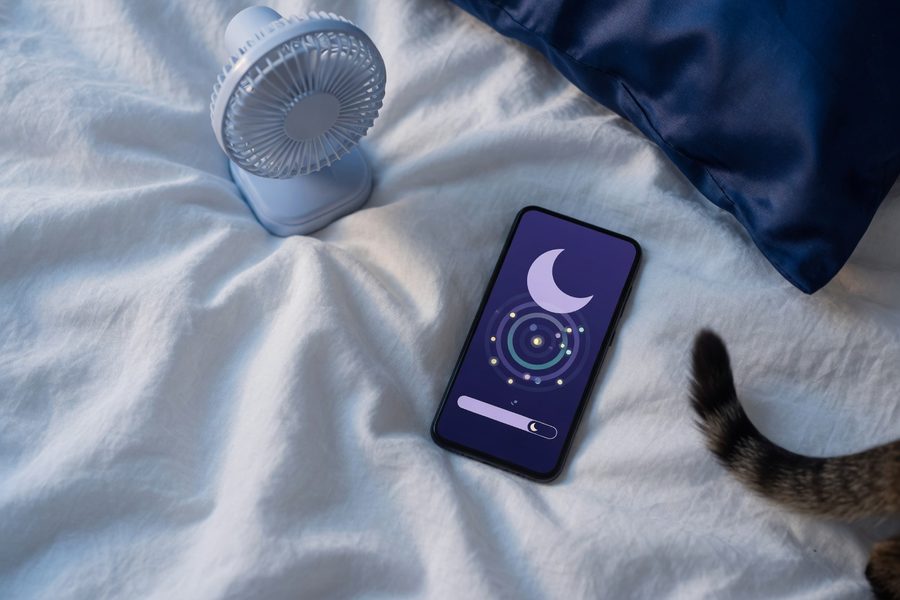
Background noise from a fan, a snoring partner, or a pet jumping on the bed can trick the microphone into reading extra wake time. Also, if you share a bed, sonar-based apps may pick up your partner’s breathing and skew your data unless you use the two-person mode.
Step 2: How Accurate Are AI Sleep Tracking Apps Compared to a Sleep Lab?
They’re good at detecting whether you’re asleep or awake. They’re not great at telling deep sleep from light sleep. A 2023 meta-analysis of 22 validation studies, published in the Journal of Clinical Sleep Medicine, found that consumer sleep trackers have above 90% sensitivity for total sleep time but show average biases of 20-30 minutes for sleep onset latency and efficiency estimates. That means an app might say you took 15 minutes to fall asleep when it was actually 40.
Dr. Dionne Morgan, a sleep medicine physician at Baptist Health Miami Cardiac & Vascular Institute, has stated publicly that consumer tracker data “is not accurate” and cannot be used to make a clinical diagnosis, a point reinforced by the American Academy of Sleep Medicine’s guidance on wearable devices. Devices cleared by the FDA as general wellness tools, including Fitbit and Apple Watch, are held to a different evidentiary standard than clinical polysomnography equipment, and that gap matters when you’re trying to act on the numbers.
Don’t panic over a single “bad” night of deep sleep. The AI’s stage classification is still an estimate. Obsessing over one low score is a fast track to orthosomnia, an unhealthy fixation on perfect sleep data.
Step 3: What Data Do AI Sleep Apps Actually Give You?
Your morning dashboard typically includes a sleep score, a hypnogram (a graph of sleep stages), total sleep time, efficiency, and latency. Premium tiers add environmental analysis, bedroom temperature, noise levels, and even light exposure. The AI then generates personalized recommendations: “Go to bed 23 minutes earlier tonight,” or “Your deepest sleep happens when the room is below 68°F.”
Some apps, like SleepScore, go further. They’ll suggest a 30-day plan with daily coaching tips based on your trends. Eight Sleep‘s smart mattress cover takes this a step further, automatically adjusting the bed temperature in real time based on your sleep stage. It’s a direct bridge between AI sleep insights and the kind of smart home integration that’s quietly reshaping how we live, much like how Starlink changed rural internet expectations.
But a lot of the advice is generic. Telling you to “avoid caffeine after 2 p.m.” when you already do that is noise, not insight. The apps that deliver truly actionable coaching are the ones that correlate your specific behaviors, like a late workout or a heavy dinner, with subsequent sleep quality, then flag the pattern for you.
Ignore the numerical sleep score for the first two weeks. Focus on the bedtime and wake-time consistency chart. That’s the metric that predicts long-term sleep quality, and it’s the one most people actually control.
How to Do This
Open the app’s settings and enable all optional data inputs, like exercise logging and caffeine intake. The AI needs context to personalize. Without it, you’re getting a one-size-fits-all script.
What to Watch Out For
Free versions often hide the most useful insights behind a paywall. You’ll see a sleep score but not the breakdown of what caused it. That’s like a car dashboard with only a speedometer and no fuel gauge.
Step 4: Do the Insights Actually Change How You Sleep?
Here’s the real question. The data is interesting, but does it move the needle? In a randomized controlled trial, SleepScore users who followed the app’s AI coaching for 4 weeks gained an average of 29 minutes of sleep per night compared to a control group, according to the company’s published science. That’s meaningful, but it came with a catch: adherence to the coaching prompts dropped by 40% after week 2. The insight alone wasn’t enough; users had to keep doing the work.
Dr. Avinesh Bhar, a board-certified sleep physician at SLIIIP.com, has described AI-powered sleep apps as “useful coaches” that are “not doctors.” For most people, the biggest behavioral change isn’t a dramatic new routine. It’s a small, boring shift, like getting out of bed at the same time every morning, even on weekends. The app’s value is in making that invisible habit visible and holding you accountable.
Where the insights fall flat is when they clash with real life. An app might recommend a 10:15 p.m. bedtime, but your work schedule or family demands make that impossible. Without flexibility, users disengage. The apps that handle this best, like Sleep Cycle, offer a “sleep window” recommendation instead of a rigid bedtime, so you can adapt without feeling like you’ve failed.
There’s also a data ownership angle worth considering. Apps like Oura and Fitbit (now under Google’s umbrella) store biometric data on cloud servers. Some health systems, including those partnered with Google Health and Apple Health, are beginning to integrate this data into patient records. The National Institutes of Health (NIH) has funded research using consumer wearable data at scale, and the Federal Trade Commission (FTC) has issued guidance on health data privacy that directly applies to these platforms. Knowing where your data goes isn’t paranoia; it’s due diligence.
How to Do This
For the next 7 days, commit to just one recommendation the app gives you, preferably the one about a consistent wake time. Ignore the rest. At the end of the week, check whether your sleep efficiency improved. One change, tracked, is more powerful than a dozen forgotten tips.
What to Watch Out For
Don’t chase the score. If you start altering your behavior solely to please the app, staying in bed longer to boost total sleep time even when you’re not tired, you’re hurting your sleep. The goal is to feel better, not to win a video game.
| App | AI Coaching Depth | Smart Home Integration | Best For |
|---|---|---|---|
| SleepScore | 30-day personalized plans | Limited (works with smart lights) | Data-driven habit builders |
| Sleep Cycle | Patented sleep stage analysis, smart alarm | Works with Philips Hue, IFTTT | Gentle wake-ups and consistency |
| Eight Sleep | Real-time bed temperature adjustments | Full smart home ecosystem | Couples and thermal regulation |
| Oura Ring | Readiness score, daily guidance | Compatible with Natural Cycles, Apple Health | Wearable-first users |
Step 5: Which AI Sleep App Should You Actually Use?
Stop looking for the “most accurate” app. There isn’t one. The accuracy differences between the top apps are marginal for total sleep time, and all of them struggle with deep sleep staging. Instead, pick the app that fits your lifestyle and the problem you’re actually trying to solve. If you want a smarter alarm that wakes you in light sleep, Sleep Cycle is the obvious choice. If you’re trying to optimize bedroom temperature and you’re willing to invest in hardware, Eight Sleep is the only option that automates the fix. If you hate wearing things to bed, SleepScore‘s contactless sonar is the way to go.
Free vs. paid matters more than most reviews admit. As noted in Wirecutter’s 2025 sleep app testing, the free tier of most apps gives you a sleep score and a basic graph, but the coaching that actually changes behavior is locked behind a subscription. If you’re not willing to pay, you’re essentially using a digital diary, not a coach. And just like skipping a pre-purchase inspection when buying a used car, you’re leaving a lot of hidden value on the table.
It’s also worth thinking about platform ecosystem. Apple Health aggregates sleep data from AutoSleep, Oura, and even third-party apps through HealthKit, which means your trends are portable across devices. Google Fit does the same for Android users, with Fitbit as the primary sleep data source since Google’s acquisition. If you’re already invested in one of these ecosystems, the companion app is often the path of least resistance rather than a standalone subscription service.
Sleep Cycle reports that fewer than 12% of free-tier users remain active after 2 months, according to internal company data shared in a 2025 investor presentation.
How to Do This
Try two apps simultaneously for 3 nights: one free and one paid trial. Compare the insights, not just the scores. If the paid app gives you a specific, actionable recommendation that the free one doesn’t, that’s the value you’re paying for. Cancel the one that just echoes what you already know.
What to Watch Out For
Subscription lock-in is rampant. Many apps auto-renew at a steep price after a 7-day trial. Set a calendar reminder to cancel 2 days before the trial ends if you’re not convinced. Also, Mozilla’s 2025 privacy review found that only 3 of the top 10 sleep apps met their minimum security standards, so check the app’s data-sharing policy before you hand over audio recordings of your bedroom.
Step 6: When AI Sleep Tracking Falls Short (and What to Do Instead)
AI sleep apps are poor tools for diagnosing sleep disorders. If you suspect sleep apnea, restless legs syndrome, or chronic insomnia, no app substitutes for a polysomnography. Consumer trackers, including those from Fitbit and Apple Watch, are cleared by the FDA as general wellness devices, not diagnostic instruments. That regulatory distinction has real consequences: the American Academy of Sleep Medicine explicitly cautions against using consumer wearable data to make clinical decisions about disorders like obstructive sleep apnea. Yet many users self-diagnose based on a low deep sleep percentage, fueling unnecessary anxiety.
The apps also struggle with shift workers. A rotating schedule breaks the algorithm’s expectation of a consistent circadian rhythm. The AI may flag your sleep as “poor” when it’s actually just shifted by 6 hours. In these cases, the insight can be demoralizing rather than helpful.
Privacy is another under-discussed risk. Apps that record audio to detect snoring are essentially putting a microphone in your bedroom. Even if the company claims to process data locally, cloud backups are common. The Mozilla Foundation’s 2025 review singled out several apps, including some integrated with Amazon Alexa routines, for vague or permissive data retention policies. Before you download, check the app’s privacy label and turn off optional audio recording if you’re uncomfortable. The FTC’s health data guidance is worth a read before you grant any app access to your biometrics.
When the app isn’t enough, go back to the basics that don’t require an algorithm: a consistent wake time, natural light exposure within 30 minutes of waking, and a cool, dark bedroom. These are the interventions that sleep physicians universally recommend, and they cost nothing. The app can be a useful accountability partner, but it’s the habit, not the hardware, that does the heavy lifting.
If you’ve been using an AI sleep app for more than 3 months and haven’t seen a measurable improvement in how you feel during the day, stop tracking. The data is no longer serving you, it’s just adding to your mental load. Focus on the two or three non-tech sleep hygiene rules that you know you’re ignoring.
Frequently Asked Questions
I’ve been using Sleep Cycle for a month, does it really improve sleep?
It can, if you act on the app’s trend data. Sleep Cycle’s internal research shows that users who follow the bedtime consistency recommendations for at least 2 weeks report falling asleep faster and feeling more rested. But if you’re just checking the score each morning and ignoring the suggestions, you’re unlikely to see a change.
Should I use a sleep tracking app or a wearable for sleep?
A wearable like an Oura ring or Apple Watch typically captures heart rate and temperature data, which improves accuracy for sleep staging. Phone-only apps are more convenient but less precise. If you already wear a fitness tracker, use its companion app; if not, a sonar-based app like SleepScore is a good zero-effort entry point.
Do sleep apps help with insomnia?
They can help with sleep hygiene and awareness, but they are not a treatment for chronic insomnia. If you have trouble falling or staying asleep more than three nights a week for several months, see a sleep specialist. Cognitive behavioral therapy for insomnia (CBT-I) is the first-line treatment, and some apps now offer digital CBT-I modules, but they still require a provider’s guidance in most cases.
Can AI sleep insights really change my bedtime habits?
Yes, but only if you’re ready to change. The insight itself is not a magic wand. The most effective users pair the app’s recommendation, like a consistent wake time, with a real-world trigger, such as a smart light that gradually brightens at the same time each morning. This combination of insight and environmental automation is what makes the habit stick.
How much sleep score improvement is realistic with an app?
Most users see a modest bump of 5-10 points on the app’s own scale within the first 2 weeks, which often corresponds to 15-30 extra minutes of sleep. Improvements beyond that require sustained behavioral changes that the app can’t enforce. If your score doesn’t budge, the issue is likely something the app can’t measure, like stress or an undiagnosed condition.
Does AI sleep tracking cause sleep anxiety?
It can. Orthosomnia, the anxiety of chasing perfect sleep data, is a recognized phenomenon. If you find yourself checking the app multiple times during the night or feeling anxious about a low score, take a break. The data is meant to be a tool, not a test.
Is it worth paying for a premium sleep app?
It depends on what you value. If you’re only interested in a basic sleep log, the free version of Sleep Cycle or Apple’s built-in sleep tracking is sufficient. If you want personalized coaching, smart home integration, or detailed environmental analysis, a premium subscription is worth the $30-60 per year, provided you actually use the features. The same rule applies as starting to invest with less than $500: small, consistent inputs beat a big one-time splash.
Sources
- Journal of Clinical Sleep Medicine, Accuracy of Consumer Sleep Trackers: A Meta-Analysis (2023)
- Baptist Health, Can You Really Trust Your Sleep Tracking Wearable? (2025)
- SLIIIP.com, AI Powered Apps for Sleep: Expert Perspective (2025)
- Wirecutter, The Best Sleep Tracking Apps (2025)
- Sleep Cycle, Internal User Engagement Data (2025)
- Eight Sleep, Smart Home Integration Pilot Study (2025)
- SleepScore, RCT Outcomes: AI Coaching and Sleep Duration (2024)