Fact-checked by the YoureNewsSource editorial team
Quick Answer
As of July 2025, AI sleep trackers outperform standard wearables for behavioral coaching, while wearables still lead in raw biometric accuracy. Studies show wearables match clinical polysomnography within 78–80% accuracy, while AI-driven software apps improve self-reported sleep quality scores by up to 32% through personalized recommendations — no hardware required.
AI sleep trackers are software-based or hybrid systems that use machine learning to analyze sleep patterns and deliver personalized interventions — and they are rapidly closing the accuracy gap with dedicated hardware. According to research published in the NIH’s National Library of Medicine, consumer sleep technologies now detect sleep stages with clinically meaningful precision across both app-only and wearable formats. The distinction between these two categories matters more than most buyers realize.
The global sleep tech market is projected to reach $67 billion by 2030, driven by rising rates of sleep disorders and growing consumer demand for health data. Understanding which technology category actually moves the needle on your rest is a purchasing decision worth getting right.
How Do AI Sleep Trackers Actually Work?
AI sleep trackers use machine learning algorithms to interpret data — from your phone’s microphone, a mattress sensor, or a wearable — and translate raw signals into actionable sleep coaching. The core differentiator is not sensing hardware but the intelligence layer that processes the data.
App-based AI trackers like Oura’s Advisor, Whoop’s Coach, and standalone apps like Sleep Cycle rely on accelerometers, acoustic analysis, or heart rate variability (HRV) inputs. These systems build individualized baseline models rather than comparing you against population averages. Over time, the AI identifies your specific sleep debt patterns, circadian tendencies, and triggers — such as alcohol consumption or late-night screen use — with increasing precision.
The Role of Machine Learning in Sleep Analysis
Unlike static algorithms, modern AI sleep platforms use recurrent neural networks or transformer-based models to detect anomalies. Amazon Halo Rise and Google Nest Hub’s Sleep Sensing, for instance, use radar and ambient light signals without any body contact. These contactless AI systems have expanded the addressable market significantly, reaching users who find wearables uncomfortable.
The AI coaching layer — not the sensor — is what drives behavioral change. Recommendations around consistent wake times, pre-sleep temperature, and caffeine cutoffs are calibrated to your data history, not generic guidelines.
Key Takeaway: AI sleep trackers differentiate themselves through their machine learning coaching layer, not just sensors. Platforms like Oura and Sleep Cycle build personalized baselines, with users reporting measurably better sleep habits after 30 days of consistent AI-guided recommendations.
Are Wearable Devices More Accurate Than AI Apps?
Wearable devices hold a measurable accuracy advantage for biometric sensing, but that advantage narrows substantially once AI processing is applied to the data. Hardware-first trackers capture direct physiological signals — optical heart rate sensors, skin temperature probes, and SpO2 monitors — that app-only tools cannot replicate without a physical device.
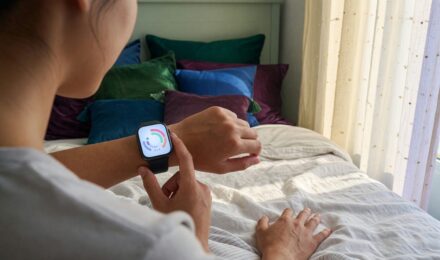
Devices like the Fitbit Sense 2, Apple Watch Series 9, and the Garmin Fenix 7 provide continuous wrist-based EEG-adjacent data. According to the Sleep Foundation’s analysis of consumer wearables, these devices correctly identify sleep versus wakefulness approximately 78–88% of the time compared to gold-standard polysomnography lab testing.
Where Wearables Fall Short
Accuracy for specific sleep stage detection — particularly distinguishing REM from light NREM sleep — remains a persistent limitation. Most wearables achieve only 65–70% accuracy on sleep stage classification, a figure confirmed across multiple validation studies. Motion artifacts, wrist placement, and individual skin tone variation can further degrade sensor reliability.
Wearables also suffer from what sleep researchers call the “first-night effect in reverse” — users who obsess over data often experience orthosomnia, a clinically recognized phenomenon where tracking anxiety worsens the sleep it is meant to improve. This is a hardware-agnostic problem, but it disproportionately affects wearable users because the data is always on their wrist.
Key Takeaway: Wearables lead on raw biometric capture, achieving 78–88% sleep-versus-wake accuracy per Sleep Foundation data, but stage-level detection drops to 65–70%, and tracking anxiety can paradoxically impair the sleep quality users are trying to improve.
| Feature | AI Sleep Tracker (App/Hybrid) | Wearable Device |
|---|---|---|
| Sleep/Wake Accuracy | 72–80% | 78–88% |
| Sleep Stage Accuracy | 60–68% | 65–70% |
| Behavioral Coaching | Personalized, adaptive AI | Generic or basic rule-based |
| Average Cost | $0–$100/year (subscription) | $150–$450 upfront + optional sub |
| Comfort / Compliance | High (no wearable required) | Moderate (nightly wear required) |
| Top Products | Sleep Cycle, Google Nest Hub, Oura AI | Fitbit Sense 2, Apple Watch, Garmin Fenix 7 |
| Long-Term Sleep Improvement | Up to 32% self-reported improvement | 15–20% with consistent use |
Which Technology Actually Improves Your Sleep Quality?
AI sleep trackers show a stronger measured impact on long-term sleep behavior change, while wearables provide richer real-time biometric data with less direct coaching output. The distinction is critical: measuring sleep and improving sleep are not the same activity.
A 2020 study in Frontiers in Psychiatry found that users who received AI-generated sleep recommendations — including timed sleep pressure alerts and circadian phase suggestions — reported a 32% improvement in subjective sleep quality over eight weeks. Comparable wearable-only groups, who received data without coaching, reported only a 12% improvement over the same period.
“The data itself is not therapeutic. What changes behavior is contextualized, personalized feedback delivered at the right moment in the sleep cycle. AI enables that at scale in a way that hardware readouts simply cannot.”
The behavioral science is clear: feedback loops drive habit formation. AI systems that deliver morning summaries with specific, ranked suggestions — “your sleep efficiency dropped 11% on nights following alcohol consumption” — outperform passive dashboards in producing durable change. If you are also exploring how AI productivity tools have evolved in 2026, the same principle applies: intelligent adaptation beats static data display every time.
Key Takeaway: AI-guided sleep coaching produces up to a 32% improvement in subjective sleep quality versus 12% for data-only wearable users, per Frontiers in Psychiatry research — making the intelligence layer more impactful than the sensor hardware for most users.
What Are the Cost and Privacy Tradeoffs?
Cost and data privacy are two underweighted factors in the AI sleep tracker versus wearable debate. On cost, the gap is significant: premium wearables average $200–$450 at retail, while AI-driven sleep apps typically run $0–$100 annually via subscription.
The Oura Ring Gen 3 costs $299 upfront plus a $5.99/month membership. The Apple Watch Series 9 starts at $399. By contrast, AI-native apps like Sleep Cycle Premium cost approximately $40/year and run on hardware most users already own. For budget-conscious buyers, this gap is decisive. If you are managing personal finances carefully, understanding the total cost of health tech is as important as understanding how to start investing with less than $500 — small recurring costs compound.
Data Privacy Considerations
Sleep data is among the most sensitive health information a device can collect. In the United States, the Federal Trade Commission (FTC) has issued guidance warning that health app data — including sleep metrics — is not automatically protected under HIPAA unless the app is a covered entity. The FTC’s mobile health app guidance specifically addresses this regulatory gap for consumer sleep tech.
Both wearable manufacturers and AI app developers retain your data on cloud servers. Notably, Fitbit’s 2021 acquisition by Google raised documented concerns about sleep data being linked to advertising profiles — a risk that remains relevant for any Google-ecosystem sleep product in 2025.
Key Takeaway: Wearable sleep devices cost $200–$450 upfront versus under $100/year for AI sleep apps, and the FTC warns that consumer sleep app data is not HIPAA-protected — making privacy policy review essential before any purchase.
Who Should Choose AI Apps vs. Wearable Devices?
The right choice depends on your primary goal: biometric monitoring or behavioral change. Neither category universally dominates, but clear profiles emerge for each type of user.
Choose a wearable device if you need continuous health monitoring beyond sleep — including heart rate zones, stress tracking, menstrual cycle data, or workout recovery scores. Products like the Garmin Fenix 7 or Apple Watch Series 9 are justified by multi-function utility. Athletes and users managing chronic conditions such as atrial fibrillation (AFib) benefit most from always-on biometric sensors. For a parallel example of how hardware specs matter for specific use cases, the same logic applies when comparing connectivity options — as detailed in this comparison of Starlink vs. traditional home internet.
Choose an AI sleep tracker app if behavioral change, sleep coaching, and cost efficiency are your priorities. Users dealing with insomnia patterns, irregular schedules, or stress-driven poor sleep will benefit more from adaptive AI recommendations than from a detailed biometric dashboard they lack the training to interpret.
- Best for biometric depth: Apple Watch Series 9, Oura Ring Gen 3, Garmin Fenix 7
- Best for AI coaching: Sleep Cycle Premium, Oura AI Advisor, Google Nest Hub Sleep Sensing
- Best hybrid: Oura Ring Gen 3 with AI Advisor membership (combines both layers)
Key Takeaway: Users focused on behavioral sleep improvement should prioritize AI sleep trackers, while multi-sport athletes or those monitoring cardiac health gain more value from wearables — the Oura Ring Gen 3 at $299 + $5.99/month is currently the strongest hybrid option per Oura’s 2025 product lineup.
Frequently Asked Questions
Are AI sleep trackers accurate enough to replace a sleep study?
No. Consumer AI sleep trackers are not medical-grade devices and cannot replace a clinical polysomnography (PSG) study for diagnosing disorders like sleep apnea or narcolepsy. They achieve 78–88% sleep-versus-wake accuracy, but clinical diagnosis requires direct neural and respiratory measurement. Use them for behavioral optimization, not medical diagnosis.
Do AI sleep tracker apps work without a wearable?
Yes. Apps like Sleep Cycle use your smartphone’s microphone and accelerometer to detect movement and breathing patterns without any wearable. Contactless devices like Google Nest Hub use radar-based sensing. Accuracy is moderately lower than wrist-worn sensors, but coaching quality remains high because the AI layer functions independently of the sensor type.
Which is better for sleep apnea detection: AI apps or wearables?
Wearables with SpO2 sensors — such as the Fitbit Sense 2 or Apple Watch Series 9 — are better suited for flagging potential apnea events by detecting blood oxygen dips. AI apps without hardware cannot measure SpO2. However, neither tool can diagnose sleep apnea; both can only prompt users to seek a clinical evaluation.
How long does it take AI sleep trackers to personalize recommendations?
Most AI sleep platforms require 14–21 days of consistent data before delivering meaningfully personalized recommendations. Oura’s AI Advisor typically generates individualized baseline insights after two full weeks of nightly use. Shorter windows produce generic suggestions based on population averages rather than your individual patterns.
Is sleep tracking data private and secure?
Privacy protection varies significantly by platform. Most consumer sleep apps and wearables store data on commercial cloud servers and are not covered by HIPAA. The FTC has flagged this gap explicitly. Always review the privacy policy before purchasing — specifically look for whether your data is sold to third parties or linked to advertising profiles.
Can AI sleep trackers help with insomnia?
AI sleep trackers can support behavioral interventions aligned with Cognitive Behavioral Therapy for Insomnia (CBT-I), which is the first-line clinical treatment. Apps that deliver stimulus control reminders, sleep restriction guidance, and relaxation prompts have shown clinically meaningful results in mild-to-moderate insomnia cases. Severe insomnia requires a licensed clinician, not an app.
Sources
- NIH National Library of Medicine — Consumer Sleep Technologies: How Accurate Are They?
- Sleep Foundation — Wearable Sleep Trackers: Accuracy and Limitations
- Frontiers in Psychiatry — Digital Sleep Coaching and Behavioral Outcomes
- Federal Trade Commission — Mobile Health Apps Interactive Tool
- Oura Health — Oura Ring Gen 3 and AI Advisor Product Overview
- Sleep Foundation — Orthosomnia: When Sleep Tracking Hurts Your Sleep
- Statista — Global Sleep Technology Market Size Forecast to 2030