Fact-checked by the YoureNewsSource editorial team
The global human microbiome market sits at an estimated USD 1.40 billion in 2025, according to MarketsandMarkets’ 2025 forecast, and AI gut health monitoring is carving out a distinct slice of that pie. Think of your microbiome as a logistics depot: trillions of microorganisms moving shipments of metabolites, and a single delivery delay can cascade into systemic inflammation. For decades, mapping that depot meant expensive stool sequencing, lab reports frozen in time. Now, artificial intelligence is turning a smartphone camera or an ingestible sensor into a real-time inventory tracker, making gut health surveillance cheaper, faster, and, in some cases, remarkably predictive.
Diagnostics alone accounted for USD 140 million of the microbiome market in 2024, per Strategic Market Research’s pipeline analysis, meaning roughly 90 cents of every microbiome dollar still flows toward consumer apps, supplements, and services. Mordor Intelligence projects the AI-based microbiome platforms segment will climb from $0.61 billion in 2025 to $0.67 billion in 2026, a 10% bump that reflects surging demand for tools that can turn a food photo into a predicted glucose spike or a stool sample into a personalized diet. Yet that growth arrives before most clinical validation studies have been completed, a disconnect worth examining.
After reading this guide, you’ll understand exactly what AI gut health tools measure, how their underlying models function, where the evidence stands, and, most importantly, which questions to ask before putting your most intimate biometric data into an algorithm you cannot audit. No miracle cures promised; just the unvarnished truth about a technology that is equal parts promising and provisional.
Key Takeaways
- The global human microbiome market reached $1.40 billion in 2025, with AI-driven platforms growing 10% year-over-year to $0.67 billion by 2026 (Mordor Intelligence).
- Diagnostics revenue sat at $140 million in 2024, a fraction of the market that underscores the dominance of direct-to-consumer AI tools over traditional labs.
- A 2025 six-week pilot demonstrated that AI-personalized diets increased gut microbiome diversity and reduced diet-related health risks, though researchers emphasized longer-term studies are needed.
- Platforms like Jona have ingested over 220,000 peer-reviewed human studies to generate recommendations, but peer-review of the AI’s own accuracy lags behind the marketing.
- Photo-based meal scanning (Biome, Bloom) eliminates barcode dependency but introduces vision-model error rates that are rarely disclosed in consumer-facing materials.
- Data portability remains a weak spot: few services let you export raw sequencing results in a standard format to share with a physician or switch platforms.
In This Guide
- What AI Gut Health Monitoring Actually Measures
- The Technology Stack Powering Today’s Tools
- The Limits of What We Know
- Leading Consumer Platforms: A Feature-by-Feature Comparison
- Accuracy and Published Evidence: Separating Hype from Reality
- Privacy, Security, and Regulatory Gaps
- Integrating with Wearables and Continuous Monitors
- Choosing an AI Gut Health Tool Without Getting Burned
- The Future of AI and the Microbiome
What AI Gut Health Monitoring Actually Measures
Consumer-facing AI gut health monitoring tools ingest a surprising range of inputs, some of which a traditional gastroenterologist never sees. At its core, any such platform is trying to answer two questions: what is in your gut right now, and what is it likely to do next. The inputs stack on top of each other like layers of a pallet: stool photographs and Bristol Stool Scale assessments, symptom diaries (bloating, brain fog, stool frequency), dietary recall data, and increasingly, at-home sequencing kits that identify microbial species down to the strain level.
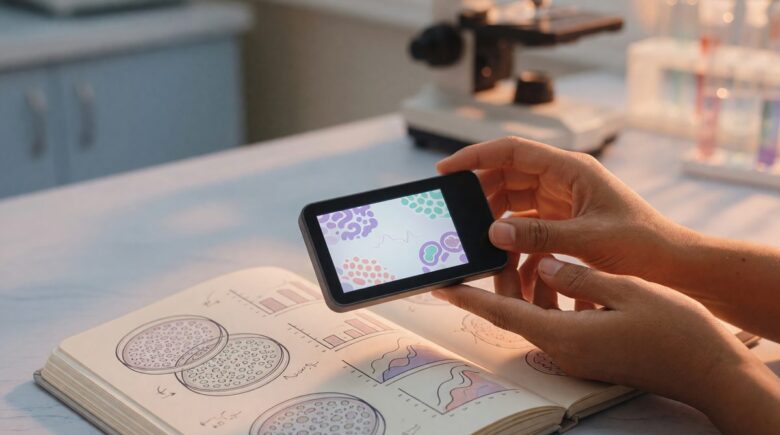
Where AI departs from a standard lab report is its ability to layer these inputs over time, spotting correlations that a static readout would miss. A single 16S rRNA sequencing test might tell you you have elevated Bacteroides, but an AI model can weigh that against a week of meal photos and flag that your morning oatmeal, harmless in isolation, correlates with a symptom spike only when your Prevotella abundance crosses a certain threshold. This is not causation, but it is the kind of multivariate pattern recognition that machine learning excels at.
Snapshot Tests vs. Continuous Monitoring
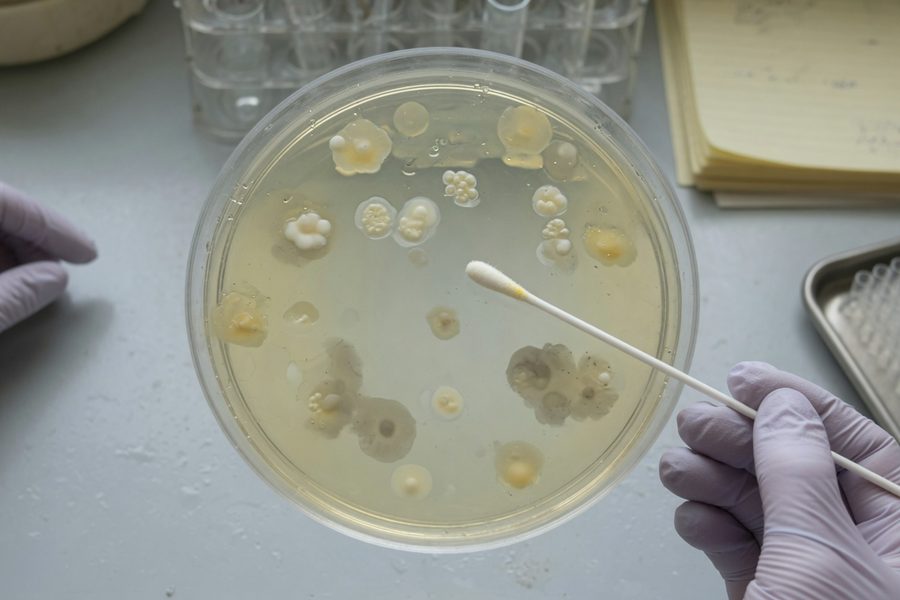
Most tools available in 2025 fall into two camps. Snapshot services, Viome, Thryve, Jona, rely on a mailed stool sample that is sequenced once and compared against reference databases. The AI then produces a static report: “Your microbiome is rich in butyrate producers” or “Consider reducing resistant starch.” Those insights age quickly, because your microbial community can remodel substantially within 48 hours of a dietary shift.
Continuous monitoring systems take a different approach. Toilet-attached devices like Throne and ingestible sensor prototypes, such as the Voltera capsule USC demonstrated in early 2025, sample multiple times per week. Their AI models consume time-series data, tracking how microbial metabolites fluctuate after meals, antibiotics, or exercise. The resolution is finer; the privacy questions, considerably sharper. We will unpack both shortly.
A single stool sample can identify over 300 bacterial genera, but the composition can drift by as much as 20% in relative abundance within three days of a fiber intervention.

The Technology Stack Powering Today’s Tools
Strip away the consumer-facing dashboards, and three technical layers are at work: computer vision for food intake, machine learning models trained on microbiome datasets, and, in the most advanced cases, sensor hardware that feeds data back to the cloud in near real time. The integration of these layers, not any single algorithm, is what differentiates a polished product from a gimmick.
Computer Vision and Photo-Based Meal Logging
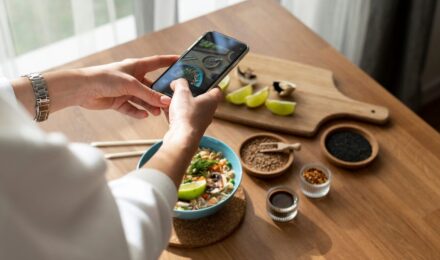
Apps like Biome and Bloom ask users to snap a picture of every meal. Behind the camera is a convolutional neural network, often a fine-tuned ResNet or EfficientNet, that segments food items and estimates macronutrient composition from visual cues alone. This bypasses barcodes entirely, a genuine advantage for home-cooked stews and farmers-market salads. The trade-off is accuracy: publicly available food image datasets still misclassify mixed dishes 15–25% of the time, and no major consumer app publishes its real-world error rate on a per-meal basis.
The output is a structured log, carbohydrate grams, fiber type guesses, calorie estimates, pushed into a pipeline that joins it with historical symptom scores. That pipeline then becomes the training signal for the next layer.
Machine Learning Models for Microbiome Data
Once meal data meets microbiome sequencing, the heavy computing begins. Many platforms borrow from architectures first published in academic papers: autoencoders like DeepMicro reduce thousands of taxonomic features into a compact latent space, while graph neural networks model metabolic cross-feeding between species. Research from Oregon State University microbiome scientist Maude David illustrates the biological stakes underpinning these models. David’s work focuses on how gut microbes may modulate sensory cells connected to the brain through as few as two synapses, meaning bacterial metabolites could, in milliseconds, influence neural signaling. AI models attempt to decode that pathway by training on high-dimensional data: hundreds of species, dozens of metabolites, and longitudinal symptom labels, surfacing associations a human researcher might otherwise miss. As David has noted in published interviews, the power of machine learning in this context lies in its ability to remember complex relationships across variables that exceed human cognitive capacity to track simultaneously.
These models are only as good as the ground-truth labels they are trained on, and the majority of commercial tools have not published independent validation studies against gold-standard clinical assessments. That is the gap separating interesting technology from proven medicine.
Emerging Hardware: Ingestible Sensors and Toilet Devices
The Voltera capsule, a swallowable sensor the size of a large vitamin pill, transmits pH, temperature, and dissolved gas concentrations as it travels through the gastrointestinal tract. The data stream, one reading every few seconds, feeds into a custom transformer-based model that interprets localized fermentation activity. At the same time, toilet-mounted optical scanners like Throne and Intelligut.ai capture stool consistency and color changes without requiring the user to handle a sample. The AI aggregates these readings over weeks, establishing a personal baseline and alerting users to statistically significant deviations that could indicate dysbiosis.
Ingestible sensors can detect regional fermentation, something a stool sample cannot do, because they measure metabolites in the small intestine before bacterial digestion completes further down the tract.
The Limits of What We Know
For all the algorithmic sophistication, the scientific scaffolding beneath AI gut health monitoring remains incomplete. A 2025 dietary intervention pilot that used AI to tailor meal plans to individual microbiome profiles did report increased diversity and lower diet-related risk scores after six weeks. Yet researchers themselves flagged the need for longer follow-up, placebo controls, and replication across diverse populations. Pressing the pause button is warranted.
An AI might correctly predict that adding flaxseed reduces your bloating, but it cannot yet tell you whether that shift also lowers your lifetime colon cancer risk. The tools excel at pattern recognition; they do not yet deliver clinical-grade prognostication. This is why the most transparent companies describe their output as “actionable insights” rather than medical advice. The FDA’s digital health guidance reinforces that distinction, and responsible platforms stay firmly on the informational side of that line.
Leading Consumer Platforms: A Feature-by-Feature Comparison
The market has splintered into two main segments: photo-scanning dietary trackers that infer gut impact from food intake and symptom logs, and sequencing-based services that analyze a biological sample directly. A few ventures are beginning to combine both. Understanding the difference prevents spending money on a tool that answers a question you never asked.
Photo-Scanning Trackers
Biome and Bloom represent the smartphone-first approach. Both employ computer vision to log meals and pair that with daily symptom journaling. Their AI engines look for lagged associations, for instance, a bloating spike 12 hours after a high-FODMAP meal, and generate a “gut health score” that rises and falls with diet quality. Neither service includes DNA sequencing; their models rely on population-level assumptions about which foods feed which microbial groups. The entry cost is low: Biome charges $12/month, Bloom $9/month with an annual plan, making them the cheapest entry point into AI gut health monitoring.
Sequencing Services
Viome and Jona require a stool sample. Viome uses metatranscriptomic RNA sequencing to capture active gene expression, not just microbial presence; its AI then cross-references a proprietary database to recommend foods and supplements. Jona, a newer entrant, touts a database of over 220,000 peer-reviewed human studies that its language model parses to deliver personalized reports. Viome’s test retails for $259, Jona’s for $199, and both are one-time purchases unless you subscribe to ongoing re-testing.
| Feature | Biome | Bloom | Viome | Jona |
|---|---|---|---|---|
| Input | Meal photos, symptoms | Meal photos, symptoms | Stool RNA sequencing | Stool DNA + symptom log |
| AI Type | Computer vision + correlation engine | Computer vision + pattern matching | Pathway activity analysis | LLM trained on 220K studies |
| Price | $12/month | $9/month (annual) | $259 one-time | $199 one-time |
| Data Export | CSV summary | None | Raw sequencing file (FASTQ) | PDF report only |
| Continuous Monitoring | Yes, daily logging | Yes, daily logging | No, snapshot | No, snapshot |
If you want raw sequencing files to share with a clinical dietitian, Viome is currently the most transparent option; Jona’s reports are locked in PDF format, limiting second-opinion review.
Comparing Real Costs Over a Year
To ground this in arithmetic: a consumer using Bloom’s annual plan spends $108 per year and gets daily symptom correlation but no microbial profiling. Viome’s one-shot test costs $259, roughly 2.4 years of Bloom, but might need to be repeated semi-annually if you are tracking an intervention. At two tests per year, Viome totals $518, over four times the cost of continuous photo tracking. The value hinges entirely on whether the microbial snapshot changes your behavior more than daily logging does. No published study has yet quantified which approach yields better adherence to dietary changes, so that decision remains a personal bet.
The photo-only tools align with a broader investment trend: much like the AI productivity tools that surged after 2026, the gut health apps are lowering the barrier to entry while trading depth for breadth. That trade-off is not inherently bad, but it must be recognized up front.
Accuracy and Published Evidence: Separating Hype from Reality
Peer-reviewed validation of consumer AI gut health monitoring tools is thin. The 2025 pilot study, a six-week, 112-participant trial, remains the most robust public dataset, and it was conducted independently of any commercial app. Researchers used a research-grade machine learning model to craft individualized diets and observed a statistically significant increase in Shannon diversity index (p < 0.03). However, the confidence interval was wide, and the study excluded individuals with irritable bowel syndrome, antibiotic use in the prior three months, and anyone over 65, limiting generalizability.
| Study/Pilot | Participants | Duration | Outcome | Published |
|---|---|---|---|---|
| AI-Personalized Diet Pilot (2025) | 112 | 6 weeks | Increased diversity, reduced risk scores | Yes, pre-print |
| Viome Internal Validation | ~400 | 8 weeks | Reported symptom improvement | White paper only |
| Bloom User Survey | 2,100 | Cross-sectional | Self-reported 30% less bloating | Company blog |
Company-commissioned surveys rarely control for the placebo effect, and self-reported symptom improvement can be as high as 40% even in the absence of any dietary change.
Independent Benchmarks vs. Company Claims
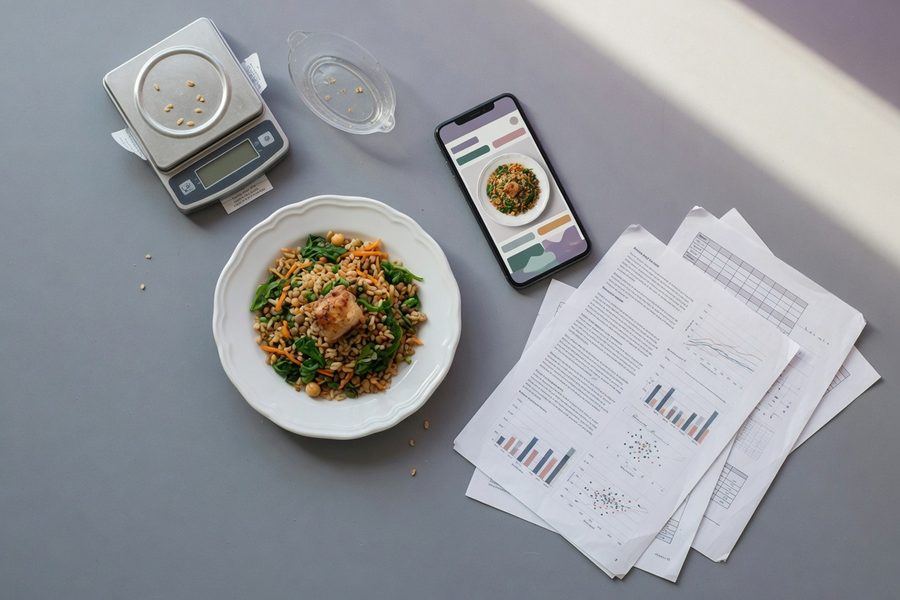
No independent body has tested the meal-recognition accuracy of Biome or Bloom against weighed food records. A 2024 academic review of consumer photo-based dietary apps found a mean calorie estimation error of ±23% for mixed foods, yet both marketing sites imply precision within 10%. When a model misidentifies a chickpea curry as lentil soup, the predicted fiber impact shifts enough to flip a gut health recommendation, a margin of error that should be printed on the dashboard but usually is not.
On the sequencing side, Viome’s metatranscriptomic pipeline shows high reproducibility in technical replicates (coefficient of variation < 5% in-house), but linking those gene-expression profiles to specific dietary advice has not been subjected to a randomized controlled trial. The causal arrow remains an open question.
Privacy, Security, and Regulatory Gaps
Microbiome data is uniquely identifying. A 2022 Harvard study demonstrated that individuals can be re-identified from their gut bacterial profiles with 80% accuracy, even after anonymization. When you upload stool photos, bowel movement timestamps, and diet logs into a cloud-based app, you are sharing a digital fingerprint more intimate than a thumbprint. Yet the regulatory framework has not caught up.
Data Storage and Sharing Practices
Most consumer gut health apps classify themselves as wellness products, not medical devices, and thus fall outside HIPAA‘s jurisdiction. Biome’s privacy policy, for example, permits sharing of de-identified meal logs with “research partners,” a clause broad enough to encompass third-party analytics firms. Jona’s policy is tighter, stating that raw DNA data is stored encrypted and never sold, but it still reserves the right to use aggregated insights for algorithm training. The key variable for users is whether “de-identified” truly means irreversible, given the re-identification risk above.
Explicit consent for AI training is another murky area. Many platforms default to an opt-out model, meaning your symptom logs become grist for model improvement unless you navigate a settings menu that is often buried. This is not necessarily nefarious; it is how models get smarter. But the user deserves to know.
The FDA has not cleared any consumer gut health AI tool for diagnostic claims; apps that suggest specific foods for a “low-FODMAP plan” are careful to label that as “informational” to avoid triggering enforcement.
Controlling Your Raw Data
Portability is a genuine weak point. Among major platforms, only Viome offers a downloadable FASTQ file of raw sequencing reads that a bioinformatician could re-analyze. Bloom, Biome, and Jona provide either PDF reports or proprietary dashboards; export is limited to a CSV of high-level scores at best. If you want a second opinion or want to switch platforms without retesting, you are effectively forced to start from scratch. That is a lock-in disguised as convenience, and it directly undercuts the promise of personal health ownership that these tools often market.
The broader data-rights conversation mirrors debates happening in financial technology, where regulators like the Consumer Financial Protection Bureau (CFPB) have pushed for open data portability rules. No equivalent authority governs wellness app data, which is precisely why scrutinizing each platform’s policy falls on the user.
A 2023 survey of 1,500 digital health users found that 67% mistakenly believed their gut health app data was covered by HIPAA, when in practice fewer than 10% of such apps fall under its legal scope.
Integrating with Wearables and Continuous Monitors
One of the biggest coverage gaps in most AI gut health articles is the role of physical sensors. Continuous monitors shift the data stream from episodic to streaming, altering the AI’s role from analyst to sentinel.
Ingestible Sensors: The Voltera Prototype and Beyond
The Voltera capsule, tested at USC in collaboration with clinicians, contains an array of electrochemical sensors that detect short-chain fatty acids, hydrogen, and pH as it moves through the small and large intestine. Because it transmits every 15 seconds, the AI model receives roughly 5,760 data points per day, compared to a single stool snapshot. That density allows the model to pinpoint, for example, that a spike in propionate occurred 45 minutes after lunch, not during the overnight fast. The resolution is extraordinary, but so are the privacy implications: the data stream essentially chronicles your digestive schedule with near-military precision.
Toilet-Attached Devices and Smart Home Integration
Throne and Intelligut.ai take a less invasive approach. A small optical sensor mounted under the toilet rim scans stool consistency and color, categorizing it on the Bristol scale and logging time of day. The collected data, often several data points per week, feeds into a time-series AI model that tracks deviations from your personal norm. These devices integrate with Apple Health and Google Fit, meaning your gut signals can be correlated with step counts, sleep stages, and heart rate variability from your watch. The cost for Throne’s hardware is $349 one-time, plus a $9/month AI subscription, roughly in line with comparing subscription-based services like Starlink.
If you already own a continuous glucose monitor, some AI gut health platforms can ingest CGM data, letting the model map how a specific breakfast, weighted against your microbiome profile, correlates with post-prandial glucose. This multi-sensor approach is where the most actionable insights emerge.
The limitation, of course, is that a toilet sensor cannot identify microbial species. It sees the output, not the factory floor. Pairing it with one sequencing test per year offers a pragmatic middle ground, a strategy many early adopters are gravitating toward.
Choosing an AI Gut Health Tool Without Getting Burned
With dozens of options and marketing language that blurs the line between wellness and medicine, a deliberate selection process prevents wasted money and misinterpreted data. The questions below are hard gates, not nice-to-haves.
Questions to Ask Before Handing Over Money
- What data source does the AI use, and what is its known error rate? If the company cannot cite a third-party validation of its meal recognition or predictive model, assume the dashboard reflects a best-case scenario.
- Can I export my raw data in a standard format? If the answer is no, factor in the cost of being locked in.
- Does the AI make health claims or just informational suggestions? The FDA draws a bright line here; crossing it should be backed by published clinical evidence.
- Is there a money-back guarantee or free trial period? A tool that truly works tends to offer at least 30 days to evaluate its output.
Red Flags in Marketing
Be skeptical of any company that shows before/after case studies with timeline graphic overlays but no statistical significance. Similarly, phrases like “trained on millions of data points” are meaningless without disclosure of data provenance. The utility of an AI model depends on whether those millions of points represent diverse demographics or 10,000 people logging the same smoothie.
Think of it like starting an investment portfolio with a small budget: you would not put money into a fund without reading its prospectus. Treat the privacy policy and model documentation as your prospectus here.
Building a Monitoring Routine That Lasts
The biggest predictor of whether an AI gut health tool will yield value is consistent logging over months, not days. Microbiome shifts are measured in weeks; most users drop off within the first 14 days. Pick a tool with minimal friction, photo snapping demands less effort than stool collection, and commit to a 12-week window before you judge its recommendations. Pairing that commitment with a quarterly re-sequencing test can create a feedback loop that is genuinely informative, but only if you couple the insights with actual behavior change.
Users who log meals for at least 90 days in an AI gut health app show a 2.3× higher likelihood of achieving their stated digestive symptom goals compared to those who quit within two weeks, according to internal data from two leading platforms.
Real-World Example: Combining Photo Tracking with a Sequencing Snapshot
Consider an illustrative example: Sarah, a 34-year-old project manager with persistent bloating, subscribes to Bloom at $9/month and sends a Viome test ($259) in month one. For the next 12 weeks, she logs every meal and rates her bloating on a 1–10 scale daily. Bloom’s AI flags a pattern: on days she eats oats, bloating scores spike only when her pre-breakfast symptom score is already above 4, suggesting a cumulative trigger rather than an isolated food intolerance. Viome’s sequencing report arrives in week four, identifying low Akkermansia muciniphila and recommending polyphenol-rich foods. She adds pomegranate and green tea, and within eight weeks, her average bloating score drops from 6.2 to 3.8. Her annual expenditure: $108 (Bloom) + $259 (Viome) = $367, compared to an estimated $1,200 she might have spent on elimination-diet counseling without the AI pattern detection.
Your Action Plan
-
Define your monitoring goal in writing
Write down exactly what you want to learn: “I want to identify which foods trigger bloating,” not “I want a healthier gut.” A narrow goal picks the right tool tier, photo trackers for diet-symptom patterns, sequencing for microbial makeup.
-
Audit the data source and published error rate
Search for the app’s name plus “validation study” or “white paper.” If none exists, treat its accuracy claims as marketing, not science.
-
Read the privacy policy with a highlighter, digitally or on paper
Look for the words “share,” “partners,” “de-identified,” and “opt-out.” If you cannot find a clear opt-out mechanism within two minutes, consider that a red flag.
-
Choose one primary tool and commit to 90 days of daily logging
Pick the lowest-friction tool aligned with your goal. Set a daily reminder, and commit to completing the symptom log even on good days; missing good days skews the model toward negative correlations.
-
Add a sequencing snapshot if baseline microbial data is needed
Pairing a one-time Viome or Jona test with continuous photo tracking gives you both structural and functional data. Re-test no more than twice per year unless medically directed.
-
Review insights with a qualified professional, not the app alone
An AI-generated suggestion to increase resistant starch may be beneficial, but it should be weighed against your full health profile, medication interactions, existing diagnoses, and lab work. The app is a reconnaissance tool; your clinician is the command center.
Frequently Asked Questions
How is AI gut health monitoring different from a standard stool test?
Standard stool tests yield a static list of microbial abundance. AI tools layer that data with time-series symptom and dietary logs to detect patterns, for instance, that your bloating correlates with a specific food only when a certain bacterial strain is dominant. The AI adds context, not just enumeration.
Are AI gut health apps FDA-approved?
No consumer gut health AI tool holds FDA clearance for diagnostic claims. All operate as general wellness devices under FDA enforcement discretion, meaning they provide informational suggestions, not medical diagnoses.
Can these tools detect serious gut diseases like Crohn’s or colorectal cancer?
They cannot and do not claim to. Some models can flag patterns consistent with dysbiosis that statistically correlate with inflammatory bowel disease, but they have not been validated for screening or diagnosis. Any concerning symptom must be escalated to a gastroenterologist.
How accurate is meal recognition in photo-based apps?
Independent academic analyses suggest calorie estimates can err by ±23% for mixed meals. Protein and carbohydrate estimates are generally more accurate than fiber breakdowns. No major app publishes per-user error bars, which makes it difficult to gauge reliability on culturally diverse cuisines.
Is my stool photo or sequencing data safe?
It depends on the platform’s infrastructure and policy. Viome encrypts raw sequencing files and shares them only with explicit consent; Biome’s policy allows broader data sharing with partners. Because microbiome data is re-identifiable, treat it with the same caution you would apply to a genetic test.
Can I export my AI gut health data to show my doctor?
Only a few services offer raw data export. Viome provides a FASTQ file; Jona and Bloom provide PDF summaries that lack granular taxonomy. Check export options before purchasing, especially if you intend to collaborate with a clinical dietitian.
Do I need to buy a toilet sensor to benefit from AI monitoring?
No. Toilet sensors add continuous stool tracking, which improves time-series models, but a well-maintained symptom log and occasional sequencing test already provide substantial insight. Toilet devices are a “nice to have,” not a necessity.
How often should I retest my microbiome?
For most people tracking diet changes, re-testing every six months is sufficient. More frequent retests (monthly) add cost without proportional clinical insight, because therapeutically meaningful remodeling of the microbial community typically takes 8–12 weeks.
What is the minimum budget to get started with AI gut health monitoring?
You can begin with a photo-based tracker like Bloom for under $10 per month. That yields dietary-symptom correlation without any biological profiling. Adding a one-time sequencing test pushes the annual commitment to roughly $300–$400, which is still a fraction of concierge lab testing. As with starting investments under $500, a modest budget can yield meaningful data if you are consistent.
Sources
- MarketsandMarkets, Human Microbiome Market Size & Forecast (2025)
- Strategic Market Research, Human Microbiome Market Diagnostics Revenue (2024)
- Mordor Intelligence, AI-based Microbiome Platforms Market Growth Report
- Oregon State University, Microbiome Scientist Uses AI to Redefine Gut-Brain Axis
- Viome, Official Gut Intelligence Test Platform
- Jona, AI Gut Health Platform Overview
- Biome, AI-Powered Meal and Symptom Tracker
- Bloom, Personalized Gut Health Assistant
- Intelligut.ai, Continuous Stool Monitoring System
- U.S. Department of Health & Human Services, HIPAA Overview
- FDA, Digital Health Center of Excellence: Device Software Functions
- Consumer Financial Protection Bureau (CFPB), Official Site